A Validation Framework for Nonclinical Submissions
FDA announced its draft guidance, General Considerations for the Use of New Approach Methodologies in Drug Development, in the Federal Register on March 19, 2026. Issued by the Center for Drug Evaluation and Research (CDER), the document outlines general principles for study design, validation and reporting when developers submit nonclinical NAMs data.
The scope covers human drugs and biological products regulated by CDER, including data supporting drug applications and certain orders for topical over-the-counter monograph drugs. It encompasses complex and conventional in vitro systems, computational approaches and other non-animal methods. The guidance concerns drug development and regulatory submissions; it does not address NAMs used in drug discovery.
The draft distinguishes validation from qualification of a drug development tool. Validation establishes a method’s accuracy, reliability and relevance for a specified context of use. Qualification establishes how the results of a tool can be interpreted and used within an agreed regulatory context. This document addresses validation; qualification follows separate procedures.
FDA points to experience with non-animal methods for eye irritation, skin irritation and skin sensitization. For skin sensitization, defined adverse outcome pathways, combinations of in vitro and computational methods, and validated test guidelines have helped establish confidence in the relationship between a test result and human risk.
Define the Decision and the Relevant Human Biology
The first consideration is context of use: the data gap a method addresses and the development or regulatory decision its results will inform. Examples include selecting doses for first-in-human or later clinical studies, planning patient monitoring, explaining adverse effects observed in animals or humans, and showing why a particular animal species would add little to a risk assessment.
The second consideration is human biological relevance. A model should capture the physiological features needed to answer the proposed question. A liver toxicity system, for example, may need relevant cell populations, metabolic competence and sustained albumin production. The appropriate cellular composition depends on the mechanism and endpoint under investigation.
The draft gives organ-specific examples. Glial, endothelial and stromal components can influence the baseline properties of a neurotoxicity model. Hepatocytes, stellate cells and Kupffer cells can contribute different aspects of liver physiology. Reconstructed lung tissue may be characterized through membrane integrity and ciliary activity.
A model used for repeated exposure should maintain relevant functions throughout the observation period, such as albumin and urea secretion alongside metabolic or injury markers. A developmental toxicity model should represent the developmental window relevant to the clinical outcome being considered.
Characterize the Assay and Its Sources of Variability
Technical characterization is the third consideration. FDA recommends describing dosing and exposure schedules, preparation of test materials, detection systems, statistical methods and criteria for positive, negative or inconclusive findings. Performance measures such as sensitivity and specificity should be related to the intended use.
Reference compounds, cell provenance and donor characteristics are part of that characterization. Developers should document whether cells are primary, immortalized or stem-cell-derived, along with relevant isolation or differentiation methods, passage history and culture conditions. Assay performance should remain stable throughout use, including when new batches of cells or reagents are introduced.
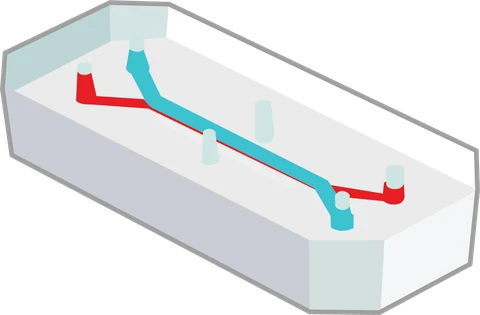
For organ chips and related platforms, the draft also addresses flow, shear stress, matrix properties and scaffold manufacture. Leached materials can affect cells, while sorption of a test drug into a device can reduce the concentration reaching the tissue. These interactions need to be separated from the biological response that the assay is intended to measure.
Assess Fitness for the Intended Purpose
The fourth consideration is whether a method is fit for purpose. Where an established comparator exists, the draft recommends showing that the NAM characterizes the relevant risk at least as well. Comparisons may examine sensitivity, specificity, predictive performance and false-positive or false-negative results.
A NAM may replace an existing method, fill a gap that established models cannot address, or corroborate and extend other findings. Its strengths and limitations should therefore be evaluated against the particular question, including the effects of study design and reproducibility on the overall safety assessment.
The draft also explains that FDA may consider data from a method before validation is complete. A fit-for-purpose NAM may address a specific toxicological concern within a weight-of-evidence assessment that includes existing product knowledge and other nonclinical information.
Draft Status and Early Regulatory Dialogue
FDA encourages early discussion with the relevant review division, particularly on questions specific to an indication, disease, organ or endpoint. The March document is a draft containing nonbinding recommendations. The Federal Register notice specified May 18, 2026, as the date for comments to be considered before work on a final version, under docket FDA-2025-D-6131.