Colorectal Cancer Immune Assembloids for IFNγ Agonist Comparison
Patient-derived colorectal organoid assembloids with stromal and immune cells used to compare recombinant IFNγ, an untargeted reference and Roche-engineered FAP-targeted IFNγ receptor agonists.
Comparing cellular and spatial immune responses to engineered cytokine candidates in a mixed tumor–stromal–immune model.
Model & Design
Patient-derived colorectal cancer organoids, autologous cancer-associated fibroblasts and allogeneic peripheral blood mononuclear cells in a three-dimensional matrix.
Experimental Format
Untreated, recombinant IFNγ, untargeted reference and FAP-targeted cis/trans/all-in-one conditions compared through imaging, cytokine assays, single-cell transcriptomics and T-cell migration.
Model Components
Component
Tumor and stromal components
Description
Patient-derived colorectal tumor organoids combined with fibroblasts from the same tumors.
Contrast each treatment with untreated assembloids and distinguish recombinant cytokine from the untargeted and FAP-targeted constructs.
Published Evidence
Study Design
Comparative exposure of patient-derived assembloids to recombinant and engineered IFNγ agonists; key Figure 4 comparisons at 100 nM.
Study Sample
Figure 4 reports three or four independent patients for histologic measures and three patient-derived lines for migration.
Comparison
Untreated controls, recombinant IFNγ and an untargeted receptor-binding reference.
Finding
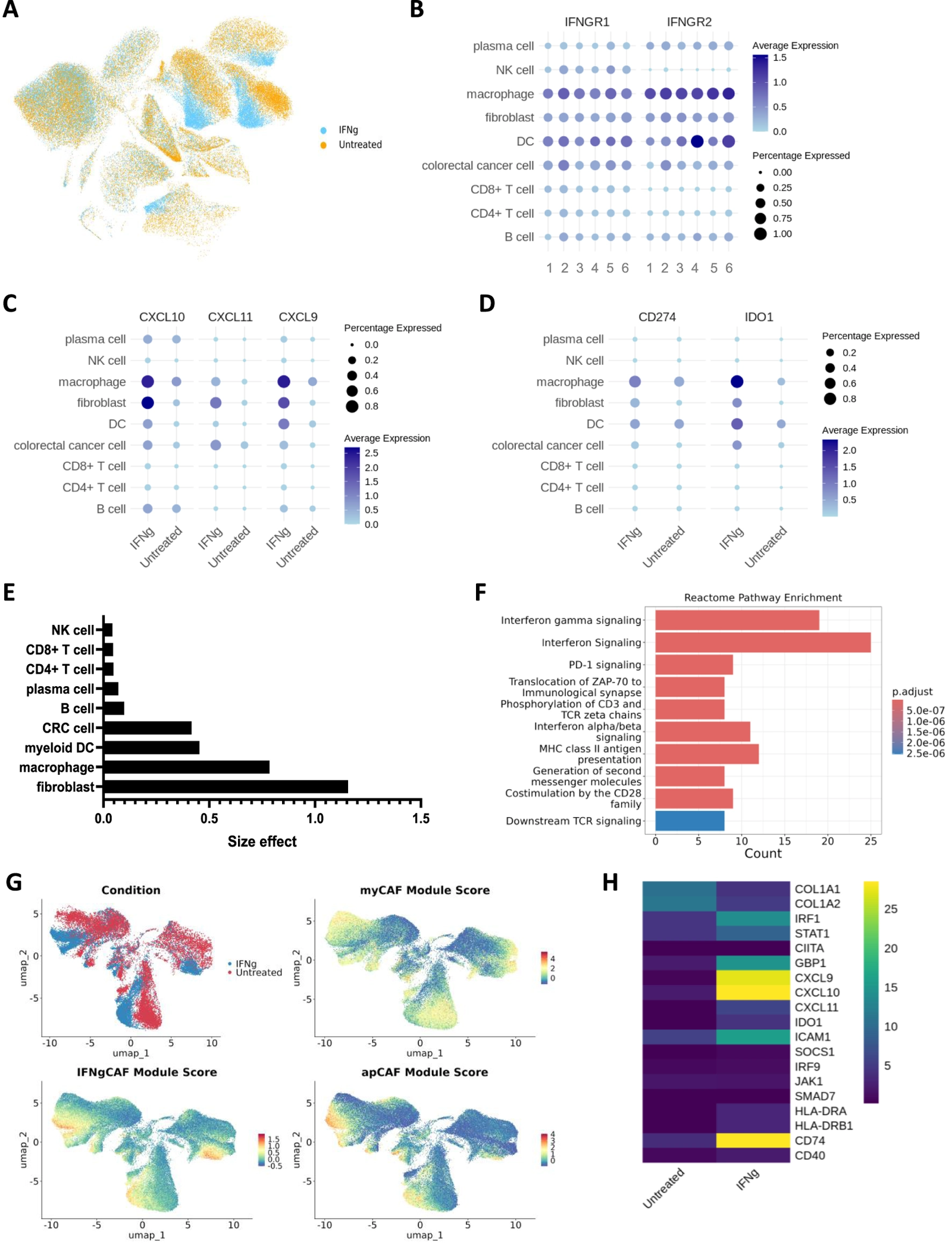
Recombinant IFNγ significantly reduced Ki67 and increased CD8 migration; FAP-targeted constructs gave little PD-L1 upregulation but Ki67 and CD8 migration changes were trends that did not reach significance over untreated controls.
Interpretation & Limits
Roche designed the molecules, funded and conducted the study; several authors held company stock or patents.
The assembloids use allogeneic immune cells and lack vascular and systemic interactions.
Roche used patient-derived colorectal tumor assembloids to compare its engineered FAP-targeted IFNγ agonists with recombinant IFNγ and an untargeted reference. The targeted constructs induced some immune signals with less PD-L1, while Ki67 and CD8 migration changes did not reach significance.