
European Genotoxicity (Q)SAR Analysis Finds Endpoint-Specific Performance

A retrospective analysis of pharmaceutical regulatory data found better performance for Ames-test (Q)SAR models used in ICH M7 work than for models of mammalian-cell or in vivo genotoxicity. Reliability checks improved performance in some comparisons.

The University of Vienna main building, with construction work visible in the foreground.
University of Vienna, photographed in April 2023. (CAPTAIN RAJU, CC0 1.0)

One Data Set, Three Kinds of Genotoxicity Evidence

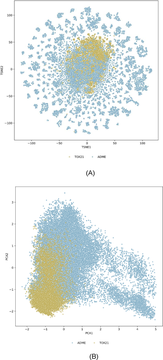
Researchers affiliated with medicines agencies in Austria and France and with Austrian universities assembled experimental results from public and proprietary pharmaceutical regulatory procedures. They used the curated data to examine available (quantitative) structure–activity relationship, or (Q)SAR, models for bacterial mutagenicity in the Ames test, genotoxicity in mammalian cells in vitro, and genotoxicity in vivo.

The team compared predictions across those experimental endpoints and examined structural alerts, chemical subspaces, prediction-reliability filters and expert review as ways to improve model performance.

The Endpoint Changed the Result

The authors found that performance depended on both the endpoint and the model. Ames-test models routinely used in ICH M7 analyses performed better than the models assessed for mammalian-cell and in vivo genotoxicity.

The additional analyses improved prediction performance in many comparisons. Even so, the authors concluded that mammalian-cell and in vivo genotoxicity models require further refinement before they can be used in regulatory decision-making.

Sources

  1. Mazoudji A et al. Retrospective (Q)SAR analysis of genotoxicity data from European pharmaceutical scientific advice and authorization procedures and performance improvements using structural alert and chemical subspace analyses, reliability filtering, and expert review. Regulatory Toxicology and Pharmacology. 2026. DOI: 10.1016/j.yrtph.2026.106279.