Approaches & Applications

Human Cell Models in Drug Development

Human cell lines, primary cells and stem-cell-derived assays in drug response, safety and translational research.

This collection follows studies using human cells to investigate drug effects, cellular function and disease-related responses. It includes primary cells, established cell lines and stem-cell-derived models, with each article identifying the actual cell source and experimental setting.

Coverage considers what was measured, the relevant comparison and the extent of validation. Related method profiles provide model components, endpoints and published evidence. Organoid and organ-on-chip studies appear here when their human-cell approach is central to the research.

Research & Analysis

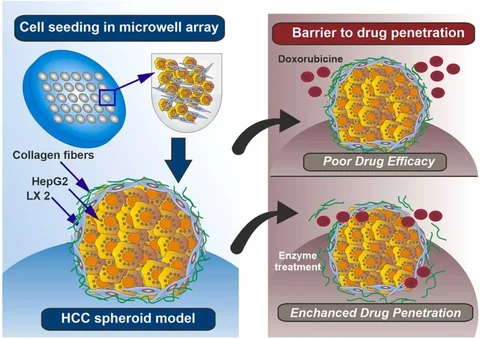
An ECM-Rich Capsule Limits Doxorubicin Entry into HCC Spheroids

An academic team co-cultured HepG2 and hepatic stellate LX-2 cells to form a liver tumor spheroid model. Spheroids with a collagen-rich outer layer showed reduced doxorubicin penetration; disrupting that layer improved the drug response in the model.

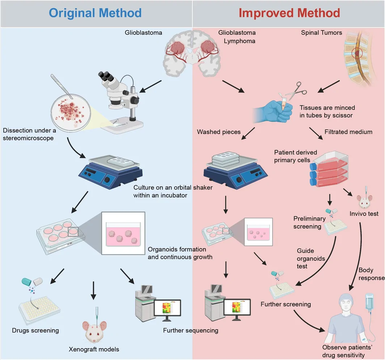
Wolman Disease Organoids Reveal a Biliary Response to Liver Injury

Isogenic human liver organoids with LIPA loss reproduced lipid accumulation and multicellular inflammatory and biliary responses with increased fibrogenic gene expression. Restoring LIPA in hepatocyte-like cells attenuated these molecular signals.

GSK3B Inhibition Improves Myelination in APOE4 Brain Organoids

Researchers linked APOE4-associated lipid accumulation in human oligodendrocytes to altered Wnt/GSK3B signaling. A GSK3B inhibitor reduced lipid droplets in cell cultures and increased myelination in brain organoids; the findings remain preclinical.

NIH Transporter Network Brings NAMs to Early-Life Exposure Questions

A four-center NIH network is studying transporters in the placenta, mammary gland, pediatric intestine and brain. Its published overview describes how organoids, microphysiological systems and computational models contribute to that research strategy.

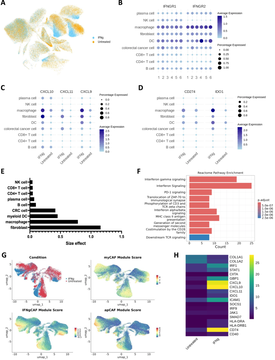
FAP-Targeted IFNγ Agonists Tested in Colorectal Cancer Assembloids

Roche used patient-derived colorectal tumor assembloids to compare its engineered FAP-targeted IFNγ agonists with recombinant IFNγ and an untargeted reference. The targeted constructs induced some immune signals with less PD-L1, while Ki67 and CD8 migration changes did not reach significance.

Human Neural Spheroids Model Myelin Injury and Repair, with Clemastine as a Test Case

A spinal-cord-patterned human neural spheroid model followed myelin damage, debris clearance and new myelin formation over weeks. In a small drug comparison, clemastine increased the share of newly formed oligodendrocytes that became myelinating cells, a cellular result rather than evidence of clinical efficacy.

45-Company Survey Finds NAM Use Most Prevalent in Early Discovery

In an IQ Consortium working-group survey of 45 companies in Asia, the United States and Europe, NAM use was most prevalent in early discovery. Uncertainty about regulatory acceptance and human translatability was cited most often as a barrier.

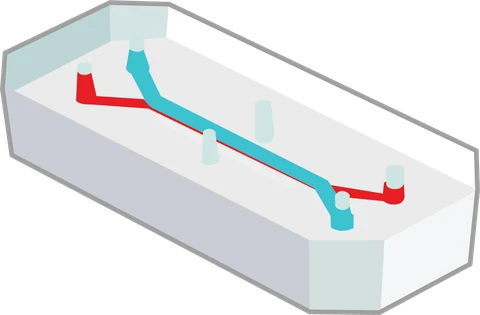
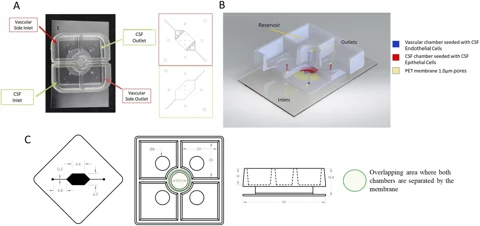
A Human Blood–CSF Barrier Chip Tracks PEG Distribution and Drug Transport

A two-compartment chip assembled from human primary cells maintained a measurable blood–cerebrospinal fluid barrier for up to 15 days. Its first applications compared the distribution of free PEG species and transport of two reference drugs; the latter comparison does not yet establish broad predictive performance.